Boilers & steam systems · Case study
Excess Steam from a Feedwater Tank Vent: A Leaking Bypass Valve
What we noticed
During a routine check we saw more steam than usual leaving the vent on the boiler feed water tank. A little vapour at that vent is normal, because hot returns flash off as they reach the tank. So the size of the plume was the clue, not the plume itself.
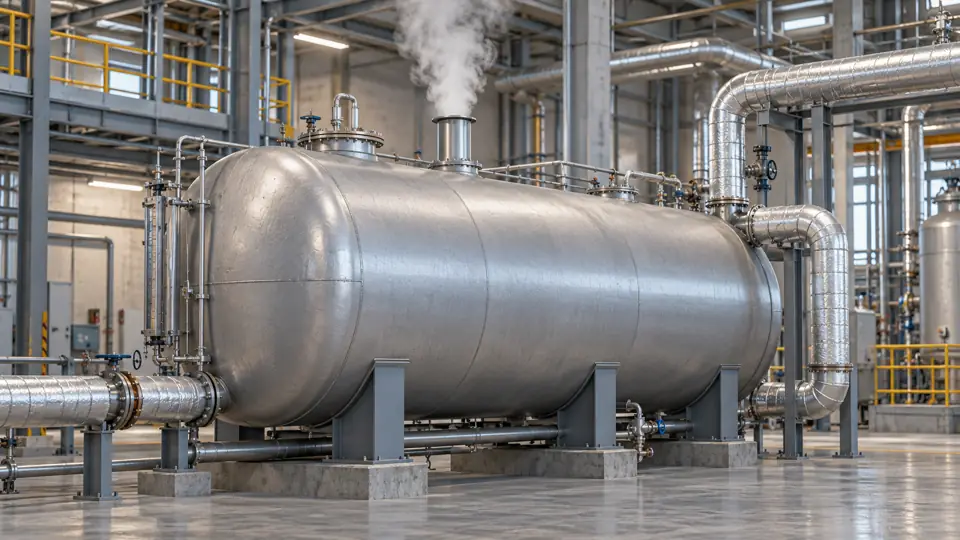
The tank takes its returns from the process area, so we followed that line instead of starting at the boiler. When a tank vent suddenly gets heavier, the useful question is what is arriving in the tank that is hotter than it should be.
What we found
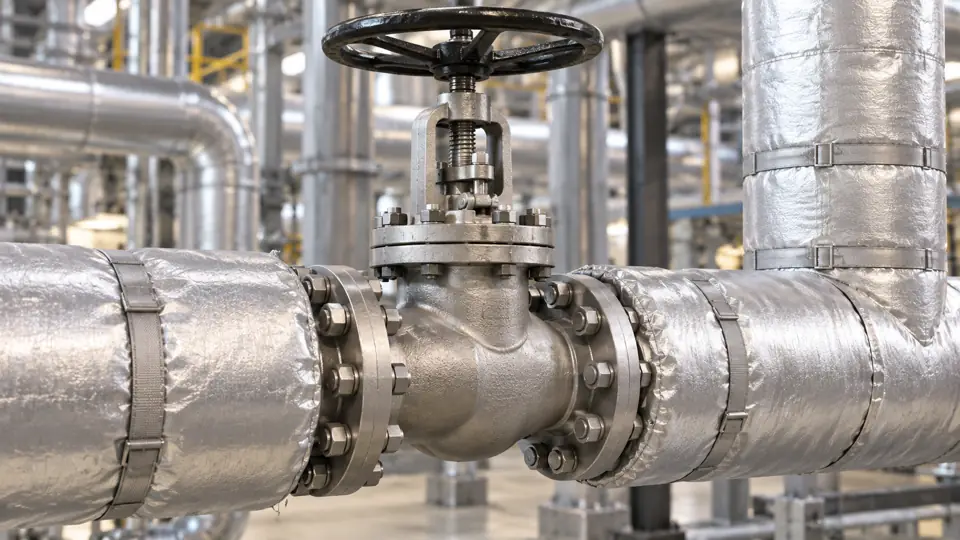
Walking the steam header, we found that one of the bypass valves was leaking. It should have been shut, and from the outside it looked shut, but steam was passing the seat and going round the part of the system it is meant to be kept out of. That steam reached the process area and came back with the condensate hotter than normal. The extra heat flashed off in the tank and left through the vent.
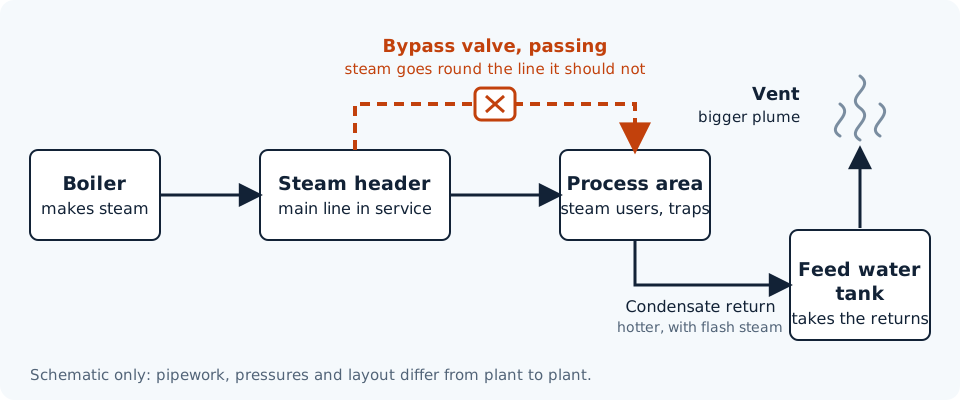
So the plume at the vent was only the visible end of the problem. The fault was upstream, at a valve in the process steam system.
Why it costs more than it looks
Steam that leaves through a vent has already been paid for. Fuel was burned to make it, and treated water went into the boiler to make it. All of that goes up the vent, and the boiler has to replace it with more fuel, more make-up water and more chemical dosing.
The short version of the cost is: steam lost in kg/h × operating hours × cost per kg of steam. A plume on its own cannot give you the leak rate, so estimate it from the valve size and pressure, or from the change in steam flow before and after the repair.
As an example, take steam at about 10 bar gauge, feed water at 90 °C, a boiler efficiency of 85 percent and a leak of 100 kg/h:
- Heat needed per kg of steam: about 2,780 − 377 = 2,403 kJ/kg, which is 0.67 kWh.
- Fuel per kg after boiler losses: 0.67 ÷ 0.85 = about 0.79 kWh.
- For 100 kg/h that is about 79 kWh of fuel every hour, or roughly 1,885 kWh a day.
- At a fuel cost of $0.04 per kWh, that is about $75 a day and close to $27,500 over a full year, before counting the water and chemicals.
Put your own steam pressure, feed water temperature, fuel price and leak rate through the steam leak cost calculator. It works from either a measured steam flow or a hole size, and gives the heat lost, fuel burned and annual cost. The energy and running cost calculator is still the right tool for pricing electrical loads such as the feed pump.
What it does to the boiler and the process
The first effect is on the bill: more fuel for the same output. The second is on water and chemicals, because every kilo lost at the vent has to be replaced with treated make-up water.
There are quieter effects too. Hot returns raise the temperature in the feed water tank, and as the water gets closer to boiling there is less margin before the feed pump starts to cavitate. A noisy pump is worth a look if the tank is running hotter than usual. Steam going through a bypass is also steam that is not going where the process wanted it, so a header that loses pressure or a process that runs a little slow can come from the same leak.
How to check for a passing bypass valve
- Listen first. A passing valve usually hisses even when everything around it is quiet. A listening rod or an ultrasonic detector makes this much easier.
- Compare the vent with a normal day. If the plume has grown with no change in production, look for a new source of extra steam or hot condensate.
- Check the temperature of the condensate coming back from the area. A sudden rise points to steam getting into the returns.
- Watch the pressure downstream. If a bypass is passing around a pressure reducing station, the pressure after it can creep up.
- Compare steam flow with production. Steam used per unit of product that slowly climbs is often a leak you have not found yet.
The fix, and how to confirm it
The line is isolated under the normal permit and isolation procedure, and the valve seat is repaired or the valve replaced. After the work, the vent is the best check: at a comparable production load it should settle back to its usual size, the return temperature should drop, and steam used per unit of product should fall.
Write down the before and after figures. They give you the real saving, which is always better than an estimate.
How to stop it happening again
Bypass valves are easy to forget because they are used rarely, and a worn seat can sit there for months. Put the normally closed bypasses on the steam walk-down route and on the planned maintenance list. Where a bypass is almost never used, a blind flange or a second isolation valve is worth considering. When the tank vent changes, check the returns and the passing valves as well as the tank.
Record the symptom, the cause, the repair and the result in the maintenance log. The free breakdown and maintenance log templates are set up for exactly this kind of finding.